New Scan Helps Disclose TBI: Traumatic Brain Injury
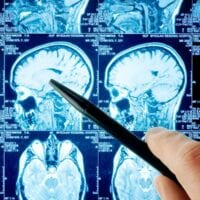
A new MRI scanning technique, called diffusion tensor imaging, or DTI, can disclose abnormalities in patients with traumatic brain injury, whose injuries could not be seen on any diagnostic imaging, according to a study recently published in the New England Journal of Medicine, and reported by the National Library of Medicine.
As an attorney handling traumatic brain injury cases, I see this as having great potential for helping people with TBI and MTBI convince judges and juries that their injuries are real. Read about a recent TBI case in 2019 where Callaway & Wolf won a $266,000 jury verdict against the City of San Francisco.
Help For TBI & MTBI Patients
For most MTBI cases now, we have to rely on neuropsychological testing, and witnesses who notice mental impairments in MTBI victims. The defense usually relies heavily on the lack of evidence of injury in any diagnostic images, such as traditional MRIs, claiming that the victim if fabricating or exaggerating symptoms following a head injury. These symptoms commonly include impaired short-term memory, inability to concentrate or multi-task, disorientation, and generally slowed thinking.
What Makes TBI and MTBI Difficult to Diagnose?
Although some 80+% of people who suffer a concussion-or MTBI-have only temporary cognitive impairment, memory loss, and other symptoms, some have long-lasting or permanent problems. Ironically, brain abnormalities are seen in autopsy for MTBI sufferers. This is of course no help for clients seeking recoveries in MTBI cases.
Oftentimes, the person with the MTBI is a intelligent, high-functioning person, who can appear normal, or even above average, despite the impairment. Having an objective imaging test to show the effects of MTBI would increase the chances of getting appropriate compensation for people with these injuries.
Ask an Expert San Francisco Brain Injury Lawyer
Callaway & Wolf have handled many traumatic brain injury cases around the Bay Area. Our expert lawyers in San Francisco have years of experience in cases involving traumatic brain injuries.
Request a free case evaluation from a San Francisco traumatic brain injury attorney, or call us at 415-541-0300. Or click here to get help online.

Boone Callaway is a personal injury & medical malpractice lawyer in San Francisco who has been working with clients in the Bay Area for over 25 years. Mr. Callaway is one of only a few personal injury litigators in San Francisco who is a Super Lawyer, AV Rated and is also a member of ABOTA – American Board of Trial Advocates.